

How Thoughts and Emotions Affect the Body Physically
We have spent considerable time examining the external factors that shape human health: nutrition, digestion, environmental exposures, sleep, and movement.
These are not minor influences.
They are primary inputs into the body’s regulatory systems, continuously shaping how the organism functions.
There is now a growing number of practitioners trained to evaluate these inputs with increasing precision, using both clinical insight and advanced testing to better understand where the system is under strain, and how to support its return to balance.
This work is important.
But it is not complete.
Because the human organism is not shaped by external inputs alone.
There is another category of influence, less visible, often overlooked, but no less real.
It is the internal environment created by thought, emotion, perception, and meaning.
And like all other inputs, it acts continuously on the same regulatory networks, shaping how the system responds, adapts, and maintains coherence.
A Question That Reveals More Than It Seems
Consider the following.
Imagine two individuals.

One smokes, drinks, eats poorly, and rarely exercises.
But they move through life with a consistent orientation toward love, gratitude, forgiveness, and generosity.
The other does everything “right” by conventional standards: clean diet, regular exercise, no obvious risk behaviors, but lives in a state of anger, resentment, chronic dissatisfaction, and perceived scarcity.
Which of these individuals is placing more strain on their system?
There is no simple answer.
But the question reveals something essential:
Health is not determined by any single category of input.
It reflects the total load placed on a regulatory system, and the system’s capacity to adapt to that load.
What we eat matters.
How we live matters.
And how we experience our lives, moment to moment, matters as well.
The Missing Category of Input
Modern discussions of health tend to separate the mental from the physical.
This is a convenient distinction.
It is also a misleading one.
The body does not experience thought and emotion as abstract events.
They are translated, immediately, into biological signals.
A perceived threat alters neural activity, shifts autonomic tone, changes hormone release, and influences immune function.
A sense of safety produces a different pattern, one that supports repair, digestion, and recovery.
These are not secondary effects.
They are part of the primary regulatory process.
From Experience to Physiology
This relationship has been explored for decades, including in the work of Candace Pert, PhD, author of Molecules of Emotion.
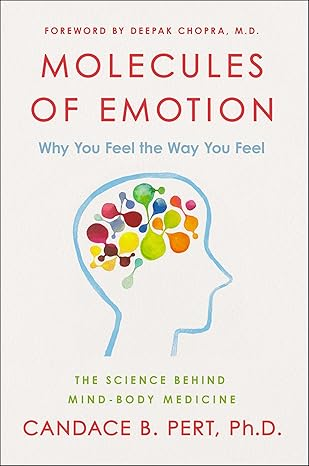
Her work helped illuminate a critical insight:
What we experience internally is not separate from the body.
It is communicated through it.
Thoughts and emotions are not simply “felt.”
They are encoded as signaling patterns: neurochemical, electrical, and hormonal, that move throughout the organism.
These signals influence:
- metabolic regulation
- immune activity
- hormonal balance
- nervous system coordination
In other words, they participate directly in the same regulatory networks we have been discussing throughout this series.
Perception: The First Filter
An important layer sits beneath even this.
The body does not respond to events alone.
It responds to how those events are perceived.
Two individuals can encounter the same circumstance and produce entirely different physiological responses.
One experiences threat.
Another experiences challenge.
A third may not register it as significant at all.
The external event is the same.
The internal signal is not.
Which means the downstream biology is not.
This is not a psychological curiosity.
It is a regulatory reality.
The Beginning of a Broader Understanding
At this point, a clearer picture begins to emerge.
The organism is continuously integrating inputs from multiple domains:
- what is eaten and absorbed
- what is inhaled and encountered
- how the body moves and rests
- and how life is interpreted and experienced
All of these inputs converge on the same regulatory networks.
All of them influence the system’s ability to maintain balance.
All of them contribute to what we have been calling coherence: the coordinated functioning of the whole.
A Necessary Clarification
This is where misunderstanding often begins, and it is worth addressing directly.
To say that thought and emotion influence physiology is not to say:
- “your thoughts are making you sick”
- or “you can think your way to health”
That is not how living systems work.
The inner environment is not the sole driver of health.
But it is not irrelevant.
It is one component of the total load placed on the system.
Some patterns are consciously shaped.
Many are conditioned over time.
All participate in the regulatory process.
Where This Leads
If we are to understand health through the lens of systems biology, we cannot exclude any category of input that meaningfully affects regulation.
The inner environment is one of those categories.
Not as metaphor.
Not as philosophy.
But as biology.
In the sections that follow, we will examine this more closely:
- how perception shapes physiological response
- how repeated emotional patterns become chronic inputs
- how meaning and orientation influence stability under stress
- and how these factors interact with the broader system we have been describing
Because if coherence is the goal,
then everything that influences coherence must be understood.