
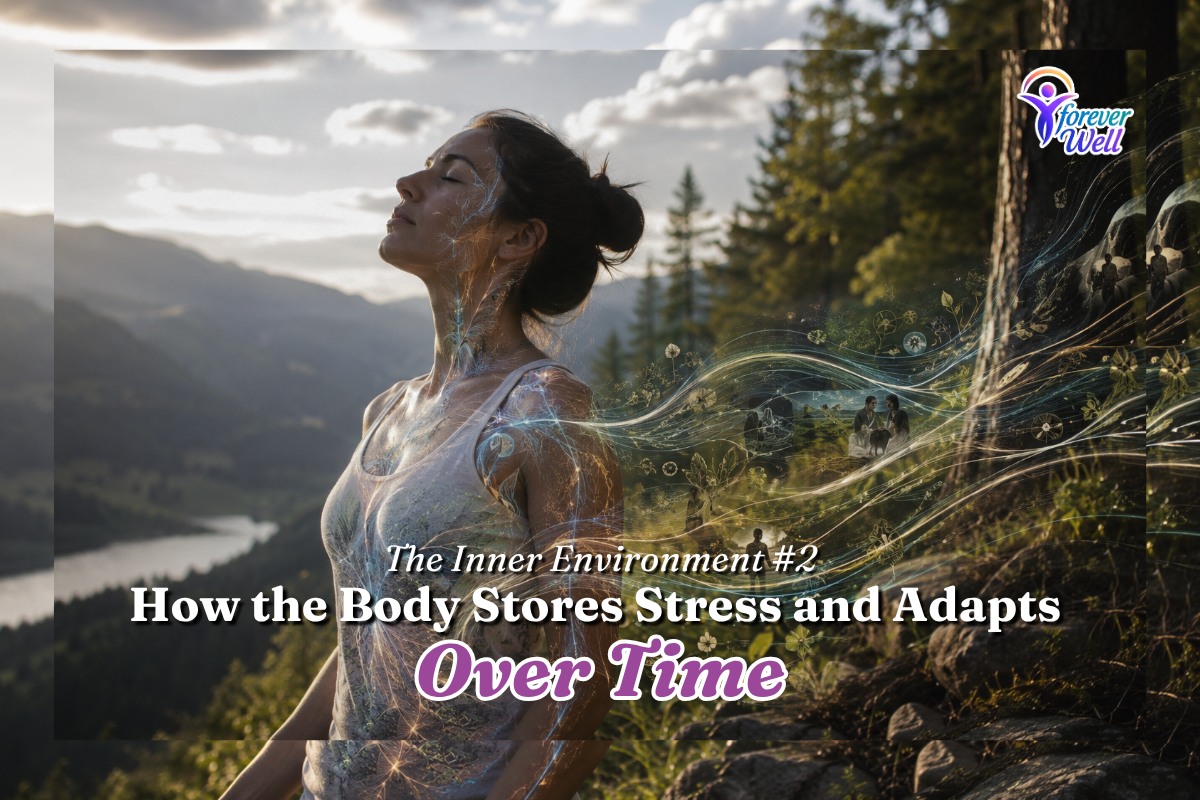
How the Body Stores Stress and Adapts Over Time
Your body remembers more than you think.
Long after a stressful moment has passed, its effects can remain woven into the body’s inner environment. Understanding this helps explain why health is about more than symptoms alone.
In Part 1, we introduced a simple but essential idea:
Health is shaped not only by what happens to us from the outside, but by the condition of the inner environment through which every experience must pass.
That environment is not fixed. It is alive, responsive, and constantly adapting. But to understand it more clearly, we have to move beyond the obvious.
The inner environment is not defined only by biology. It is shaped by what we live through. It changes with the burdens we carry. It changes with what we have experienced and how those experiences were processed, or not processed. It changes with the stress we normalize, the emotions we suppress, and the patterns we learn to live inside.
Over time, those patterns do not simply fade. They become part of the environment the body must function within.
The Body Organizes Around Experience

Most people think of stress as something temporary: something that comes and goes. But the body does not experience it that way.
When strain is repeated, the organism adapts. The nervous system adjusts. Hormonal rhythms shift. Muscle tone changes. Breathing patterns alter. Immune signaling recalibrates.
In the short term, this is intelligent. It is how we survive.
But when those patterns persist, they stop being responses and start becoming baseline. The body begins to organize itself around them. This is one of the least understood dynamics in modern health.
What we often call “normal” is not necessarily natural. It is often the result of adaptation. Adapted to pressure. Adapted to tension. Adapted to emotional load. Adapted to a way of living that the body has learned to accommodate, even if it comes at a cost.
Emotions Are Not Separate from Physiology
This is where the work of Candace Pert, PhD becomes important.
In Molecules of Emotion, she helped bring attention to something that should be obvious, but is often overlooked:
Emotions are not abstract experiences. They are expressed through real signaling processes within the body. Thoughts, perceptions, and emotional states are translated into biochemical and neurological activity that affects the entire organism.
This helps explain something many people have felt but not fully understood:
- Why tension can live in the body for years.
- Why grief can be felt physically.
- Why chronic stress alters digestion, sleep, and energy.
- Why physical release can sometimes trigger emotional release.
The body is not separate from our experience of life. It is the medium through which that experience is carried.
The Nervous System Remembers
The work of Bruce Perry, MD, PhD, particularly in his collaboration with Oprah Winfrey in What Happened to You?, deepens this understanding.
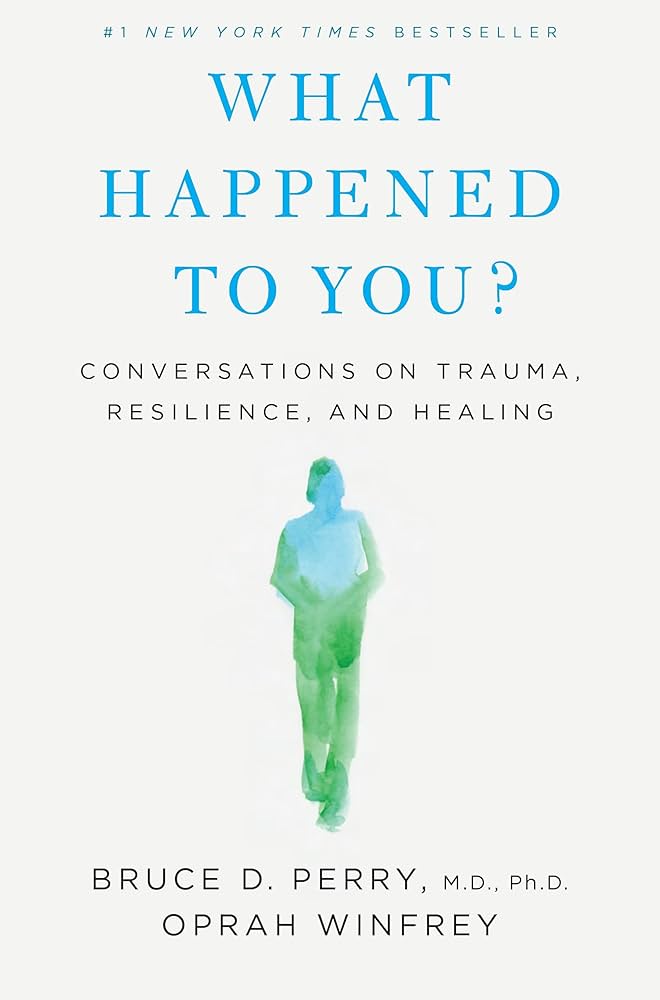
Through decades of research into early-life stress and trauma, Perry has shown that the brain and nervous system develop in response to repeated experience. What is experienced consistently becomes wired as expectation.
When a system is exposed to safety, connection, and stability, it learns to operate from that foundation. When it is shaped by unpredictability or emotional disruption, it adapts differently, often organizing around vigilance, protection, and withdrawal.
These are not conscious choices. They are learned patterns of regulation. Over time, they shape how a person responds to the world, to relationships, and even to their own internal signals. What looks like behavior is often biology expressing history.
This does not mean that illness is “in the mind.” It means that lived experience becomes part of the biology that the body must manage.
When Patterns Become Physiology
This is where the idea of the inner environment becomes more precise. It is not simply a collection of inputs. It is a conditioned state.
A system that has learned:
- how to respond
- what to expect
- what to guard against
- and what it believes is necessary to stay safe
That conditioning influences everything:
- how the body handles stress
- how quickly it returns to baseline
- how flexible or rigid its responses become
- how much tension it carries
- how it regulates inflammation, immunity, and repair
Over time, the system can lose flexibility. It becomes less able to shift out of protective patterns, even when they are no longer needed. This is where many chronic symptoms begin to take hold.
A Different Question
When symptoms appear, the natural instinct is to ask:
What is wrong?
But there are other questions that often leads deeper:
- What has this system been living with?
- What patterns has it adapted to?
- What pressures has it organized around?
- What signals has it been interpreting, day after day, year after year?
Because the body does not operate in isolation from experience. It reflects it.

And what we call symptoms are often expressions of how that experience has been integrated, or left unresolved, within the system.
The Body Is Not Betraying You
This perspective changes something important. It shifts the view of the body from adversary to participant.
Symptoms are not always signs that the body is failing. They are often signs that the body has been working, adapting, compensating, protecting, within the conditions it has been given.
That does not make them desirable. But it does make them meaningful. And meaning opens the door to a different kind of response.
Restoration Is Not Just Intervention
If the inner environment is shaped by lived experience, then restoration is not only about targeting symptoms.
It is about changing conditions. Reducing chronic strain. Allowing what has been carried to be acknowledged and, where possible, resolved. Creating experiences of safety and support. Allowing the system to shift out of constant defense.
This is not a single step. It is a process. But it is a process the body is designed to respond to. Because beneath the adaptations, the organism retains its capacity for regulation. And when the conditions begin to change, that capacity often begins to re-emerge.
What Comes Next
If the body is shaped so deeply by experience, then an obvious question follows:
- How does this information move through the system?
- How do thoughts become signals?
- How do emotions alter physiology so quickly?
- How does the body coordinate these responses across so many interconnected systems?
To answer that, we need to look more closely at how the body communicates within itself. Because the inner environment is not only shaped by experience. It is shaped by signaling. And that is where we turn next.