The Body as an Electrical System: Biophysics & Chronic Health
The Body as an Electrical System
In Biophysics Part 1, we introduced a simple but often overlooked idea:
The human body is not only chemical. It is also electrical.
This is not philosophy. It is established physiology.
Every moment of your life depends on electrical activity.
Your heart beats because of it. Your brain thinks because of it. Your muscles move because of it. Your cells communicate through it.
Modern physiology recognizes these principles, but it does not integrate them into a system-level understanding of health—particularly in chronic disease.
That gap matters.
Because once you understand the body as an electrically coordinated system, a different picture of health—and disease—comes into focus.
Energy and Electricity
When people speak about “energy,” they often mean something vague or undefined.

In physiology, the experience of energy reflects specific biological processes:
- the generation of cellular fuel
- the maintenance of electrical charge
- the coordination of signaling across systems
Energy is not abstract.
It is expressed through structure, chemistry, and electrical activity.
Among these, electrical activity plays a central coordinating role.
It organizes how signals move. It governs how cells respond. It enables systems to function as an integrated whole.
The Electrical Nature of Life
Every cell in the body maintains a voltage.
This membrane potential is created by the separation of charged ions across the cell membrane.
That voltage allows the cell to:
- regulate transport
- produce energy
- communicate
- respond to its environment
Without it, the cell cannot function.
Across the organism, this becomes a coordinated electrical network.
Cells do not operate in isolation. They operate in communication.
The Body’s Communication System
The nervous system is the most visible example.
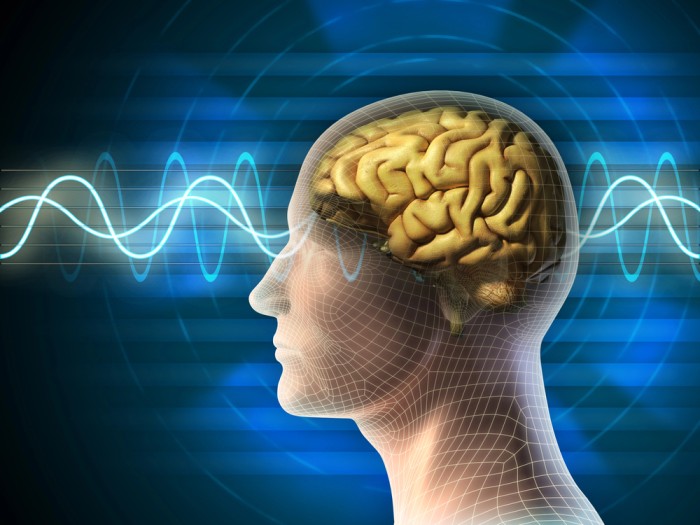
Neurons transmit signals through rapid changes in voltage, allowing for:
- thought
- sensation
- movement
- coordination
But electrical signaling extends far beyond the nervous system.
- the heart maintains rhythm through electrical conduction
- muscles contract through electrical activation
- tissues coordinate repair through bioelectrical signals
- development follows electrical gradients that guide growth and form
This is foundational biology.
Coherence and Organization
Electrical systems are defined not only by activity, but by organization.
A healthy system operates with coherence:
- signals are synchronized
- communication is efficient
- responses are adaptive
When coherence breaks down:
- signals become disorganized
- timing is disrupted
- communication degrades
This distinction is visible in cardiac rhythm:
A coordinated rhythm sustains function. A disordered rhythm destabilizes it.
Same structure. Different organization.
From a biophysical perspective, this difference—coherence versus disorganization—is central to understanding health.
A Different View of Chronic Illness
Chronic disease is typically described in chemical or structural terms:
- inflammation
- hormone imbalance
- neurotransmitter disruption
- genetic influence
These descriptions identify components.
They do not explain coordination.
Chronic illness reflects a breakdown in the body’s ability to regulate across systems:
- metabolism
- immune function
- hormonal signaling
- nervous system coordination
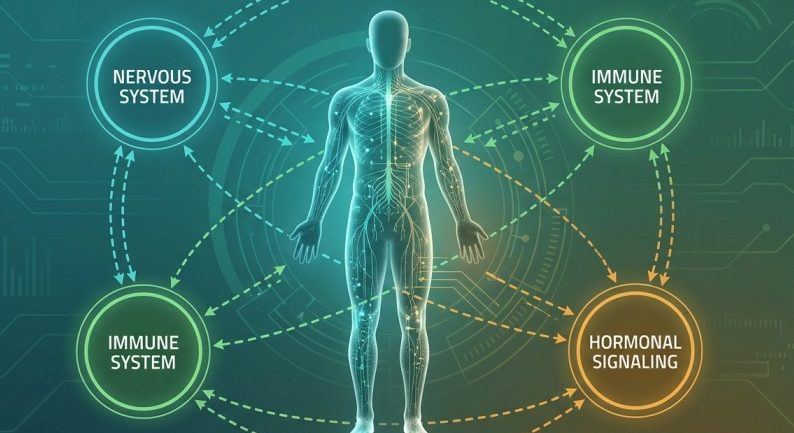
This is not a failure of a single pathway.
It is a disruption of integrated regulation.
Over time, this presents as:
- metabolic dysfunction
- immune dysregulation
- hormonal instability
- neurological symptoms
Regardless of how a condition begins, chronic disease consistently involves disrupted coordination across systems.
The Limits of a Chemical-Only Model
Pharmaceutical interventions alter pathways.
They change signaling. They modify biochemical activity.
These effects can be useful and, at times, necessary.
But altering a pathway is not the same as restoring system-wide coordination.
Pharmaceutical interventions do not restore coherence. They do not restore the organization of signaling across systems.
That distinction becomes critical in chronic disease, where the problem is not a single pathway, but the regulation of many.
The Environment Shapes the Signal
Electrical systems respond to conditions.
In the body, those conditions include:
- nutrient availability
- mineral balance
- hydration
- sleep
- stress
- movement
- light exposure
These factors influence the body’s ability to maintain electrical gradients and coordinated signaling.
Changes in these inputs often produce wide-ranging effects because they act on the regulatory system itself.
This explains why:
- improving sleep affects mood, metabolism, and immunity
- changing diet influences energy, digestion, and inflammation
- reducing stress alters multiple physiological systems simultaneously
The system responds as a whole.

A Broader Pattern in Nature
The human organism is not unique in this behavior.
Other dynamic systems display similar patterns of coordination:
- in photosynthesis, light energy is organized into chemical structure
- in bird flocks, coordinated movement emerges without central control
- in forest ecosystems, networks exchange signals and resources across large distances
These systems differ in form, but they share a defining feature:
They operate as integrated, coordinated wholes.
The human body functions in the same way.
A Note on Humility
Our understanding of these processes remains incomplete.
Biochemistry developed over decades into a detailed science.
Biophysics is earlier in that progression.
What is known today represents a beginning, not a conclusion.
But even at this stage, a clear principle emerges:
Living systems maintain function through coordinated organization.
The body is not simply a collection of chemical reactions.
It is an electrically coordinated system—continuously organizing, adapting, and responding to changing conditions.
Health reflects coherence within that system.
Disease reflects its disruption.
Understanding that distinction changes how we think about both.