Factors That Influence Health: Understanding Nutrition, Detox, and Vitality
If recovery begins when supportive conditions return, what conditions most strongly influence the body’s regulatory balance?
This question brings the discussion from theory into everyday life.
Throughout this series, we have explored how the human organism functions as a network of interconnected regulatory systems. Metabolism, immune signaling, hormonal rhythms, neurological coordination, and digestion continuously interact to maintain balance within the body.
When these systems operate in harmony, health emerges as the natural expression of that coordinated activity.
But these regulatory networks do not function in isolation. They respond continuously to the conditions surrounding the organism.
The food we eat.
The air we breathe.
The sleep we obtain.
The movement we engage in.
The stresses we experience.
The environmental exposures we encounter.
Together, these influences shape the biological environment in which the body’s regulatory systems must operate.
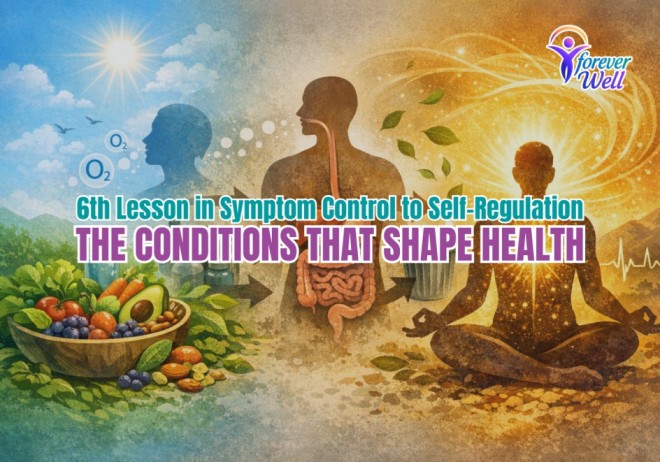
Although modern life presents countless influences on health, many of them fall into three fundamental biological categories:
what the body receives,
what the body must remove,
and the vitality available to regulate these processes.
Understanding these three forces helps clarify how the conditions of daily life influence the organism’s ability to maintain balance.
Receiving What the Body Needs
The organism requires a continuous supply of essential inputs in order to sustain life and maintain regulatory balance.
These inputs include nutrients, oxygen, water, and other substances required for cellular metabolism and repair.
Nutrition is a central example.

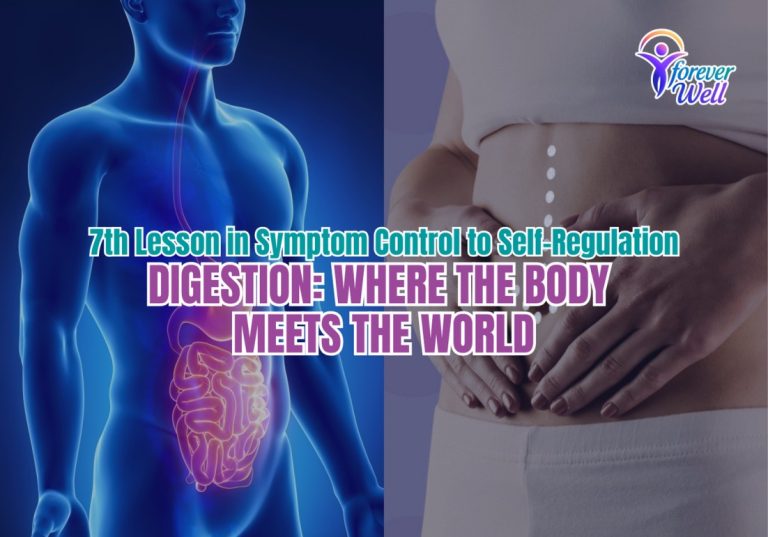
But the body must do more than simply consume food. It must digest, absorb, and assimilate nutrients before those nutrients can become part of the organism.
A familiar saying captures part of this idea: you are what you eat.
A more accurate statement would be:
You are what you eat, digest, absorb, and assimilate.
Digestive function, therefore, plays a foundational role in the body’s regulatory balance.
In biological terms, the contents of the digestive tract remain outside the body until nutrients pass through the intestinal lining and enter the bloodstream. Only then do they truly become part of the organism.
When digestion functions effectively, nutrients become available to support energy production, immune regulation, and tissue repair. When digestive processes are impaired, even high-quality nutrition may not fully reach the body’s cells.
This is one reason disturbances in digestion often ripple outward into many other aspects of health.
Removing What the Body Cannot Use
Just as the body must receive essential inputs, it must also eliminate substances that no longer serve a useful purpose.
Metabolic byproducts, environmental toxins, inflammatory debris, and other compounds must be processed and removed through the body’s elimination systems.

The liver, kidneys, lungs, skin, lymphatic system, and digestive tract all participate in this continuous process of biological housekeeping.
When elimination functions effectively, the internal environment of the body remains relatively stable.
When elimination becomes impaired, regulatory systems naturally begin to compensate for the accumulating burden.
Over time, this burden contributes to the strain placed on the body’s regulatory networks.
Vitality: The Energy of Regulation
The third element influencing health is more subtle but equally important: vitality.

In biological terms, vitality reflects the organism’s capacity to generate, organize, and use biological energy for regulation, repair, and adaptation.
Regulatory systems require energy in order to function. Every process involved in maintaining balance, digestion, immune surveillance, metabolic regulation, tissue repair, and neurological coordination, depends on the body’s ability to generate and distribute that energy.
But in living systems, energy must also be coordinated across many interacting regulatory networks.
In Lesson #5, we described this coordination as biological coherence, the ability of the organism’s many systems to operate in a synchronized and integrated manner.
Much of modern medical science has approached vitality primarily through the lens of biochemistry, examining how nutrients are converted into cellular energy through metabolic pathways. These discoveries have been enormously important in understanding how the body generates fuel for its cells.
At the same time, researchers studying living systems have begun exploring another dimension of biological organization: how energy is coordinated across the body’s regulatory networks.
Fields such as systems biology and biophysics are only beginning to explore these questions, but they suggest that the regulation of biological energy involves forms of organization that extend beyond chemistry alone.

The implications of this emerging research are fascinating. If we hope to develop a more complete framework for understanding health, we will need to explore how the body generates, organizes, and directs its biological energy.
These ideas extend beyond the scope of this lesson, but they will become the subject of a future series examining the emerging science of biophysics and its implications for human health.
When vitality is strong, regulatory systems have the resources necessary to maintain balance and respond to changing conditions.
When vitality becomes depleted, the organism’s ability to regulate itself becomes strained.
The Daily Environment of the Body
Taken together, these three forces, receiving what the body needs, removing what it cannot use, and sustaining vitality, shape the biological environment in which the organism must function.
Every day, the body responds to this environment.
Some inputs support regulatory balance.
Others create strain.
Over time, these influences accumulate.
The choices people make, the environments they inhabit, and the conditions they experience shape the direction in which their biology moves.
A Different Perspective on Health
This perspective invites a different way of thinking about health and illness.
Instead of viewing health primarily through the lens of diagnosis and treatment, we can begin to see it as the result of the conditions surrounding the organism.
When those conditions consistently support the body’s regulatory systems, balance becomes easier to maintain.

When those conditions repeatedly challenge those systems, compensation becomes necessary.
Over time, the cumulative effect of these conditions shapes the trajectory of health.
Looking Ahead
Understanding these influences does not mean that every aspect of health can be reduced to simple lifestyle choices. Genetics, infections, accidents, and other factors also influence human health.
But the daily conditions surrounding the organism remain one of the most powerful influences on regulatory balance.
In the essays that follow, we will explore these conditions more closely, examining how modern environments, habits, and exposures interact with the body’s regulatory systems and how restoring supportive conditions can help those systems function more effectively.