How the Body Heals Naturally: Understanding Recovery and Biological Balance
If the body can compensate for years while strain quietly accumulates, how does recovery actually occur?
In the previous lesson we saw how chronic illness often develops slowly as regulatory systems work tirelessly to maintain balance under increasing pressure.
Yet the same biology that allows the organism to compensate under strain also explains something equally important: its capacity to recover when conditions improve.
Living systems are not passive. They are dynamic and continuously working to maintain balance.
The organism is always moving in the direction of balance and vitality.
Adaptation, Compensation, and Recovery
Living organisms respond to changing conditions in three closely related ways: adaptation, compensation, and recovery.
Adaptation allows the organism to function under a wide range of environmental circumstances. Human physiology has demonstrated remarkable flexibility across cultures and climates.

Populations living in tropical regions have traditionally consumed diets rich in fruits, vegetables, and plant foods, while traditional Arctic populations relied heavily on fish, marine mammals, and animal fat.
Despite these differences, the human organism is capable of functioning in both environments because regulatory systems adjust to the resources available.
This adaptability reflects the remarkable flexibility of the body’s regulatory networks. Adaptation allows living systems to survive and function across a wide range of conditions.
When environmental pressures increase beyond what simple adaptation can accommodate, regulatory systems begin to work harder in order to maintain stability.
This is the stage of compensation.
Hormonal signaling may shift.
Immune responses may remain elevated.
Metabolic pathways may adjust in order to stabilize energy production.
These adjustments allow the organism to continue functioning even as underlying strain increases.
But compensation is not the final stage of the story.
When the pressures affecting the organism begin to change, a third process becomes possible: recovery.

The Biology of Recovery
Recovery begins when regulatory systems are no longer forced to devote most of their energy to maintaining stability under difficult conditions.
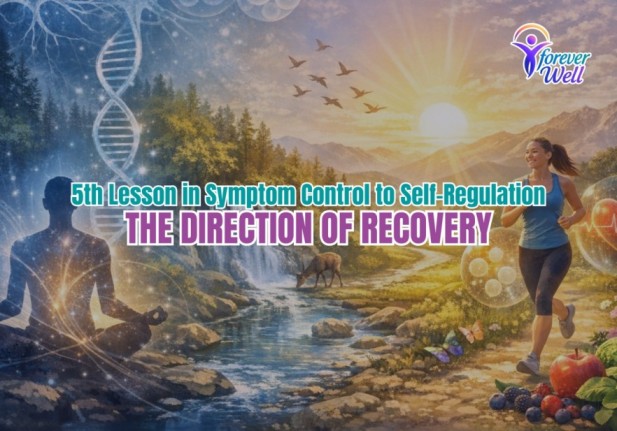
As supportive inputs return—through improved nutrition, better sleep, healthier movement patterns, reduced stress, or other positive changes—the organism can redirect its resources toward repair and recalibration.
Inflammatory signaling declines.
Metabolic flexibility improves.
Hormonal rhythms stabilize.
Communication between regulatory networks becomes more coordinated.
In other words, the organism begins restoring its internal balance.
This responsiveness should not surprise us. The structure and function of the human body are organized around a single fundamental task: maintaining vitality and coordinated regulation across its systems.
When obstacles interfere with those systems, the body devotes much of its effort to compensation. When supportive conditions return, regulatory systems begin restoring normal function.
Small Changes, System-Wide Effects
Recovery rarely requires perfect change in every aspect of life at once.
Because regulatory systems are interconnected, improvements in one area influence many others.
For example, individuals who improve the quality of their diet, reducing highly processed foods and emphasizing whole foods, often notice changes that extend beyond digestion.

Better digestion improves nutrient availability.
Improved nutrient availability supports energy production.
More stable energy influences sleep quality and emotional resilience.
These shifts cascade across regulatory networks because the systems of the body continuously communicate with one another.
Movement toward supportive conditions begins shifting the organism toward recovery.
Biological Coherence
Scientists increasingly recognize that living systems operate through coordinated communication across billions of cells.
Metabolic signaling, immune responses, hormonal rhythms, and neurological activity continuously interact to maintain stability.
Some researchers describe this coordinated state as biological coherence, a condition in which the organism’s many processes operate in harmony.
One way to imagine biological coherence is to think of an orchestra. Each instrument plays its own part, but the music only emerges when the instruments perform together in coordinated rhythm.

In biological terms, health might be described as every cell in the body singing the same song…in tune.
When regulatory strain accumulates, this coordination weakens, as if some of the instruments in the orchestra have begun to drift out of tune.
Recovery involves restoring the conditions that allow the organism’s systems to regain their coherence.
The Direction of Health
This perspective invites a different way of thinking about healing.
Instead of asking only how to suppress symptoms, we begin asking what conditions allow the organism’s regulatory systems to function well in the first place.
The human body has no greater purpose than sustaining life through coordinated function across its systems.
When the conditions of life support those systems, the organism naturally moves toward balance and vitality.
Recovery is not something imposed on the body from the outside.
It is the natural direction of a living system when the conditions that support life return.