What Is the Microbiome? How Gut Bacteria Shape Immunity, Metabolism, and Overall Health
If digestion is the primary interface between the body and the environment, what role do the trillions of organisms living within that system play in shaping health?
The answer has become one of the most important discoveries in modern biology.
The human body is not just a single organism.
It is an ecosystem.
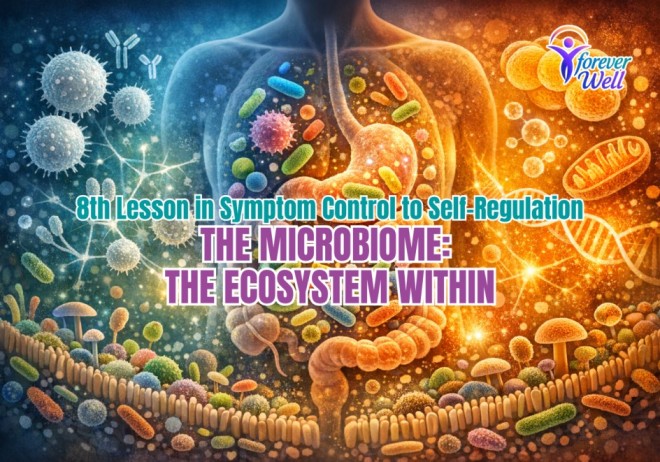
Within the digestive tract lives a vast and diverse community of microorganisms—bacteria, viruses, fungi, and other microbes, collectively known as the microbiome.
These organisms are not passive passengers. They participate actively in digestion, metabolism, immune regulation, and communication throughout the body.
In many ways, they are part of the system that maintains human health.
More Than Digestion
For many years, microbes in the digestive tract were thought of primarily in terms of digestion.

We now understand that their role extends far beyond breaking down food.
For example:
- gut microbes help break down fibers and complex carbohydrates that human enzymes cannot fully digest, producing short-chain fatty acids that nourish the intestinal lining and influence inflammation
- they contribute to how the body extracts and uses energy from food, influencing metabolic efficiency and energy balance
- they interact continuously with immune cells, helping regulate immune responses
- they produce signaling molecules that affect systems throughout the body, including metabolism and neurological function
Through these functions, the microbiome becomes a key participant in the body’s regulatory networks.
The Immune Connection
One of the most important relationships in the body is the interaction between the microbiome and the immune system.
A large portion of the immune system is located along the lining of the digestive tract.
There, immune cells are in constant communication with microbial communities—learning to distinguish between:
- harmless organisms
- beneficial organisms
- potentially harmful organisms
This interaction helps shape how the immune system responds.

When this relationship is balanced, immune activity remains regulated and appropriate.
When this relationship becomes disrupted, immune signaling can become dysregulated.
This dysregulation can contribute to patterns associated with inflammation and chronic illness.
A System of Communication
The microbiome is not simply a collection of organisms.
It is part of a communication network.

Microbes produce chemical signals that influence:
• immune responses
• metabolic pathways
• inflammation
• neurological activity
These signals travel through the bloodstream and along neural pathways, affecting systems far beyond the digestive tract.
In this way, the microbiome participates in the broader coordination of the organism’s regulatory systems.
Disruption and Dysregulation
Modern conditions can place strain on this ecosystem.
Dietary patterns, environmental exposures, stress, medications (particularly antibiotics), and other factors can alter the composition and behavior of microbial communities.

When the microbiome becomes imbalanced, several changes may occur:
• the intestinal barrier may become less effective
• immune signaling may become less regulated
• inflammatory activity may increase
• metabolic processes may shift
These changes do not occur in isolation.
They ripple outward into multiple regulatory systems, contributing to patterns associated with chronic illness.
A Real-World Example
One of the most striking illustrations of the microbiome’s importance can be seen in the treatment of certain severe intestinal infections, such as those caused by Clostridioides difficile.
In cases where conventional therapies struggle to restore balance, transferring microbial communities from a healthy individual into the digestive tract of an affected patient has proven remarkably effective.
While the procedure itself may seem unusual, its success highlights a profound biological principle:
Restoring a balanced microbial ecosystem can sometimes resolve conditions that are difficult to treat through more targeted interventions alone.
A Central but Underappreciated System
These insights raise an important question.
If the microbiome plays such a central role in digestion, immune regulation, metabolism, and communication throughout the body, why has it not played a larger role in how chronic illness is understood and managed?

Part of the answer lies in timing.
Much of what we now understand about the microbiome has emerged over the past two decades. As with many areas of science, there is often a lag between discovery and widespread changes in clinical practice.
Some aspects of this knowledge have begun to influence medical thinking. For example, the recognition that antibiotics can disrupt microbial balance has led to more cautious use in certain situations.

But beyond a few clear examples, the broader implications of the microbiome for chronic illness remain only partially integrated into everyday care.
From a systems perspective, this represents a significant gap.
When one of the body’s most influential regulatory ecosystems is treated as secondary, an important part of the biology underlying chronic illness can remain hidden.
A Broader View of the Organism
Understanding the microbiome requires a shift in perspective.
The human organism is not only composed of human cells.
It is a complex, integrated system that includes both human and microbial components.

These components interact continuously, shaping the internal environment in which the body’s regulatory systems operate.
Health, from this perspective, reflects not only the condition of human tissues but also the balance within this broader ecosystem.
Implications for Chronic Illness
This perspective helps explain why chronic illness can be difficult to understand when viewed through a purely organ-based or disease-based model.
If immune activity, metabolism, and inflammation are influenced in part by microbial signaling, then disturbances in the microbiome may contribute to patterns of chronic dysregulation.
Addressing these patterns requires more than suppressing symptoms.
It involves understanding and supporting the systems that regulate these interactions.
Looking Ahead
Recognizing the microbiome as part of the body’s regulatory system deepens our understanding of how digestion, immunity, and metabolism are interconnected.
It also reinforces a central theme of this series:
Health emerges from the coordinated activity of many interacting systems.
In the next lesson, we will explore how energy metabolism and inflammation shape these systems, and how disruptions in these processes contribute to chronic illness.