BIOPHYSICS 5
Coherence, Communication, and the Language of Life
One of the greatest limitations of modern biology has been the tendency to view the body primarily through chemistry. Chemistry is essential to life.
But chemistry alone cannot explain how trillions of cells coordinate themselves continuously in real time. Because living systems require more than molecules. They require communication.
Every moment of life depends upon the organism’s ability to: sense, interpret, respond, adapt, and reorganize itself continuously under changing conditions.
This perspective leads us to a deeper understanding of the body as an information system rather than merely a collection of biochemical reactions.
In other words: the body functions not only as a biochemical system, but as an information system.
And the science that explains the structure and function of the organism’s information system is biophysics.
Every Cell Is Constantly Receiving Information
The human organism is not passive. Every cell is continuously receiving and responding to information from the organism around it: electrical signals, mechanical forces, light exposure, nutrient availability, microbial interaction, nervous system activity, and environmental conditions.
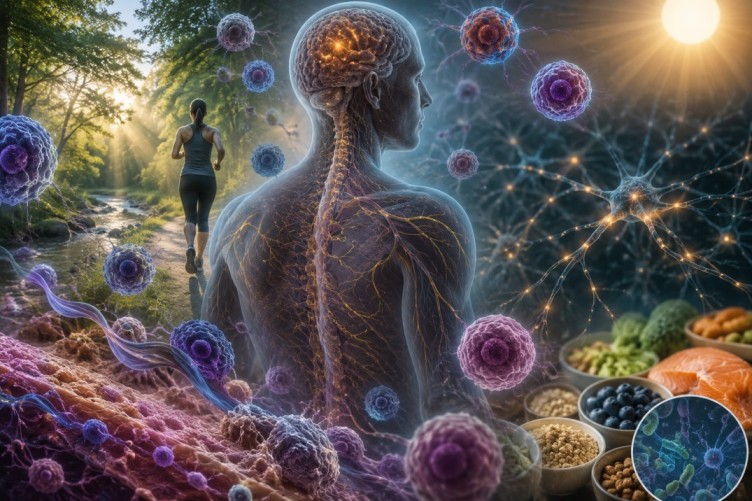
Cells are constantly adjusting their behavior according to the information they receive. Genes respond dynamically to environmental signals. Immune cells alter behavior according to context. Hormonal systems shift according to circadian timing and perceived conditions. The nervous system continuously scans for safety or threat.
Life is not static chemistry. It is organized communication.
Information Is Physical
When we speak about information in biology, we are not speaking metaphorically. Information in living systems is physical.
- Electrical gradients carry information.
- Hormones carry information.
- Mechanical tension carries information.
- Light carries circadian information.
- Nervous system signaling carries information.
- Inflammatory molecules carry information about tissue stress and immune activity.
The organism is continuously exchanging signals across interconnected systems. And those signals only become meaningful when they are organized coherently.
Timing matters. Rhythm matters. Synchronization matters.
A healthy organism depends upon precisely coordinated communication occurring continuously across the whole system.
Coherence and the Organization of Life
This is why coherence matters so profoundly in biology. The organism depends upon organized timing, synchronized signaling, rhythmic regulation, and coordinated communication across systems.
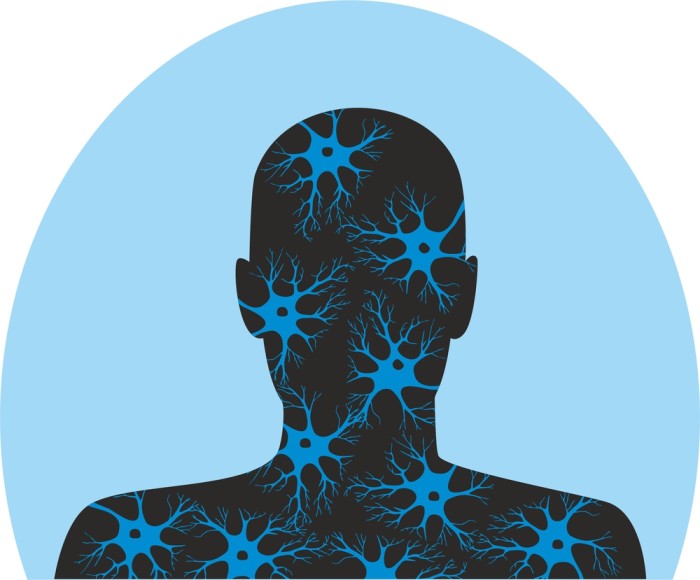
Heart rate changes according to emotional state. Hormones fluctuate according to light exposure and sleep cycles. Digestion shifts under stress. Inflammatory activity changes according to nervous system signaling.
The organism continuously reorganizes itself according to interpreted information. Not occasionally. Continuously.
The Nervous System and Perception
This becomes especially important when considering the nervous system. The organism responds not simply to the external world itself, but to its perception of the external world.
A sudden sound at night may instantly trigger increased heart rate, muscle tension, stress hormone release, and heightened vigilance before conscious thought even occurs.
Why? Because the nervous system interpreted potential danger and reorganized the organism around survival.
Two people can experience the same external event while their organisms respond completely differently. One experiences safety. Another experiences threat. The biology that follows differs accordingly.
This principle operates continuously throughout life. Safety, fear, connection, uncertainty, belonging, isolation, and emotional experience all influence physiological regulation.
This is not separate from biology. It is biology.
The Organism as a Dynamic Information Network
Once biophysics enters the discussion, the body begins to look very different. Not merely a machine made of separate parts, but a dynamic communication network continuously exchanging information across the organism.
Electrical signaling, structured water, connective tissue continuity, mechanical signaling, immune communication, nervous system regulation, and hormonal coordination all function together as part of the same integrated informational architecture.
The organism is continuously sensing, interpreting, adapting, reallocating resources, coordinating repair, and attempting to maintain coherence under changing conditions.
Health depends upon the quality, organization, timing, and adaptability of this communication.
When Information Becomes Disorganized
If coherent communication maintains regulation, then disorganized signaling destabilizes it. This is one of the deepest insights emerging from systems biology and biophysics.
Disease does not simply reflect damaged chemistry. It reflects disturbances in communication, timing, adaptation, recovery, and coordinated regulation across the organism.
- Signals become distorted.
- Recovery becomes incomplete.
- Stress responses persist too long.
- Inflammatory signaling remains chronically activated.
- Nervous system regulation loses flexibility.
- The organism gradually loses informational coherence.
This helps explain why chronic illness so often involves multiple systems simultaneously: fatigue, sleep disruption, digestive dysfunction, mood instability, chronic inflammation, heightened stress sensitivity, and impaired resilience.

These are not isolated events occurring independently. They are signs of dysregulated communication across interconnected systems.
Why Environment Matters So Much
Once the organism is understood as an information system, the importance of environment becomes much easier to understand.
The body is continuously responding to informational input from: light, food, relationships, movement, stress, sleep patterns, social connection, emotional experience, environmental exposure, and perceived safety or threat.
These inputs continuously shape physiological regulation. The organism adapts according to the signals it receives repeatedly over time.
Artificial light alters circadian information. Chronic stress signals persistent danger. Social isolation changes nervous system regulation. Ultra-processed food distorts metabolic signaling. Digital overload fragments attention and recovery.
The organism responds biologically to all of it.
Beyond Chemistry Alone
This is where the implications of biophysics become impossible to ignore. Biochemistry explains many of the molecules involved in regulation. But it cannot explain coherence itself.
It cannot explain how timing, electrical organization, environmental interpretation, rhythmic signaling, and organism-wide communication integrate continuously across the living system.
The body is not only reacting chemically. It is continuously interpreting, communicating, adapting, and reorganizing itself in real time.
The Bridge Toward a Larger Understanding
This deeper understanding of information and regulation also begins to illuminate something medicine has historically struggled to explain fully: the profound influence of thoughts, emotions, relationships, meaning, belief, and perception upon physical health.
These are not abstract experiences floating outside biology. They are biological inputs shaping the informational environment within which the organism regulates itself.
And this is where the conversation naturally begins moving toward an even deeper question: How does the inner environment of human experience influence the coherence of the body itself?
That is a question we will explore much more deeply in a future series. But first, we must understand the implications this emerging science has for medicine itself.
Because once the organism is understood as: electrical, structural, rhythmic, and informational, the limitations of the modern medical model become much easier to see.
The dominant medical model emerged before the informational nature of living systems became visible. Biophysics is helping reveal what that model could not previously see: that health depends upon coherent communication and coordinated regulation across the organism as a whole.
In Part 6, we will explore how modern medicine became trapped within a reductionist biochemical framework — and why the future of healthcare depends upon expanding the model to include the full regulatory complexity of the living organism.