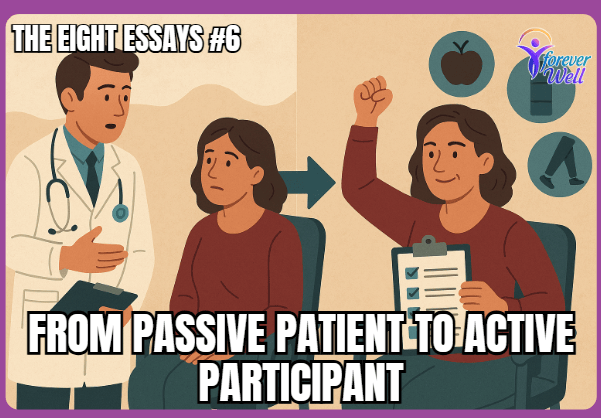
For much of modern history, the role of the patient was simple and clearly defined.
You felt unwell.
You went to the doctor.
The doctor diagnosed the problem.
You followed orders.
This arrangement made sense. In an era dominated by trauma, infection, and acute illness, expertise needed to be centralized and decisions needed to be decisive. When someone was bleeding, septic, or in respiratory distress, participation was not the goal, survival was.
That model worked extraordinarily well.
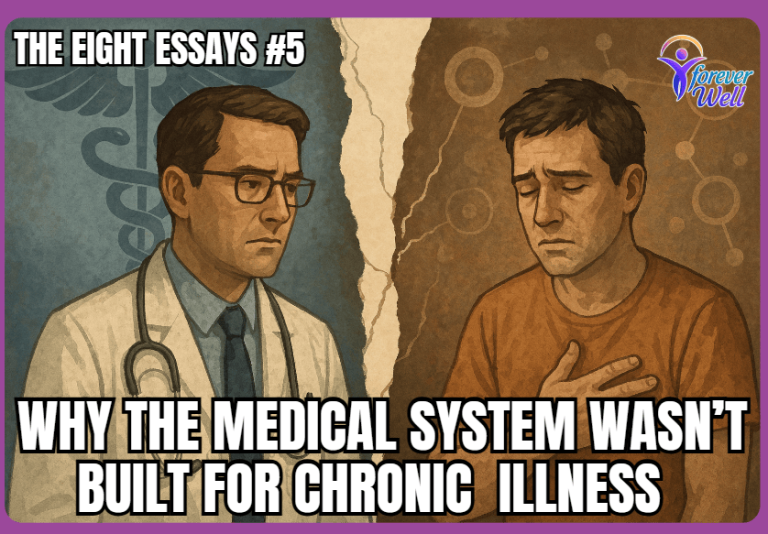
But chronic illness has quietly changed the rules, and almost no one explained that to patients, or to doctors.
How We Learned to Be Passive
Generations were raised with a consistent cultural message: doctor knows best.

That message didn’t come only from exam rooms. It came from stories. From television. From repetition.
For decades, medicine has been portrayed as heroic rescue, from early shows like Dr. Kildare and Ben Casey, through wartime portrayals like MAS*H, to modern series such as House and countless hospital-based dramas and daytime soaps.
The narrative has been remarkably consistent:
- The doctor is decisive and authoritative
- The patient is vulnerable and passive
- Diagnosis is a turning point
- Intervention is the solution
- Compliance leads to recovery
This story wasn’t wrong. It reflected an era when medicine’s greatest successes were acute and dramatic.
But it also trained us, quietly and persistently, to believe that health is something delivered to us, not something cultivated with us.
Why That Story Breaks Down in Chronic Illness
Chronic illness does not behave like acute illness.
It does not arrive suddenly.
It does not resolve quickly.
It does not respond to a single decisive intervention.
Instead, it unfolds over time, through repeated stress, incomplete recovery, and long periods of adaptation. No medication or procedure can single-handedly reverse that process.

This creates a profound mismatch.
Patients enter the system expecting rescue.
Doctors are trained to intervene.
The system is built around management.
And everyone senses that something essential is missing.
The Unspoken Shift in Responsibility
As chronic disease became the dominant challenge in healthcare, responsibility shifted, but without being named.
Modern care increasingly requires patients to:
- pay attention to patterns over time
- adjust diet, movement, sleep, and stress
- notice what drains energy and what restores it
- participate in ongoing experimentation
Yet patients were never trained for this role.
They were trained to comply, not to participate.

So when functional or systems-based care asks people to become active partners in recovery, the experience can feel both empowering and overwhelming.
Empowering because it restores agency.
Overwhelming because there is no longer a single right answer.
This tension is not a failure of the patient.
It is the result of a role change no one prepared us for.
Participation Is Not Blame
This shift is often misunderstood as abandonment: “You’re on your own now.”
That is not what participation means.
Responsibility here does not mean fault.
It does not mean perfection.
It does not mean doing everything right.
It means involvement.
Chronic illness is not resolved by obedience alone because it is not caused by disobedience. It reflects conditions, load, and capacity over time. In that context, participation is not a moral demand; it is a biological necessity.
Doctors Were Trained for a Different Job
This shift is difficult for clinicians as well.
Doctors were trained to diagnose, intervene, and manage risk. They were not trained, or reimbursed, to coach long-term behavioral change, guide iterative self-observation, or partner with patients over years of gradual restoration.
This is not a failure of intelligence or care. It is a structural limitation of a system designed for a different kind of illness.
Listening as a Clinical Skill
No physician, no matter how skilled, lives inside your body.
Only you experience its rhythms, your energy, your sleep, your resilience, your recovery. Only you can feel what supports balance and what erodes it.
In that sense, the most important doctor you will ever consult is the one you see in the mirror each morning, not because expertise no longer matters, but because awareness does.

Learning to hear yourself is not a rejection of medicine.
It is an expansion of care.
Environment, Direction, and Possibility
Living systems are responsive. They adapt to conditions.
When the environment is chronically stressful, biology compensates. When the environment becomes more supportive, less inflammatory, more coherent, better resourced, the organism tends to move back toward balance.
This is not a guarantee. It is a direction.
What you do matters not because outcomes are promised, but because the body responds.
Reclaiming Agency Without Losing Trust
The evolution required now is not from the doctor who knows best to you on your own, but toward shared responsibility grounded in biology.
Doctors bring expertise, pattern recognition, and tools.
Patients bring lived experience, daily choices, and context.
Chronic illness requires both.
Looking Ahead
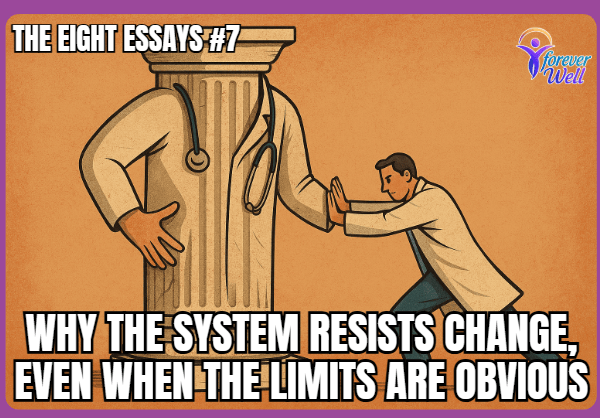
In the next essay, we’ll examine why this necessary evolution, toward broader toolsets, longer horizons, and participatory care, has been so difficult for the healthcare system to embrace, even as its limitations have become increasingly clear.
For now, this reframing is enough:
You were not wrong to trust the system you were given.
You were not trained for the role chronic illness now requires.
But participation changes trajectories.
What you do matters, not as obligation, not as blame, but because the human organism is responsive and resilient. Given the right conditions, it moves toward balance.
And that possibility is real.