If chronic illness develops gradually, why do so many people feel relatively healthy for years before symptoms suddenly appear?
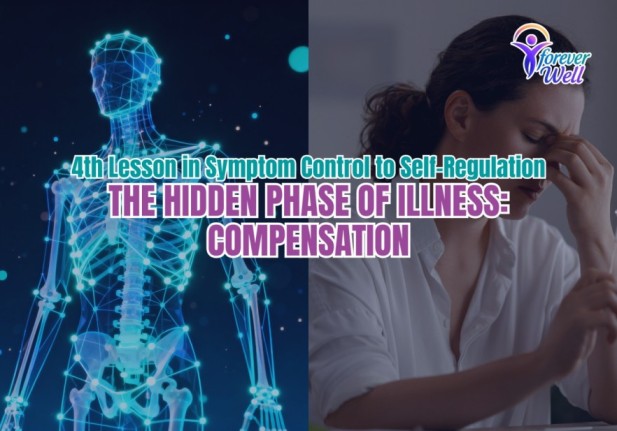
The answer lies in one of the most remarkable characteristics of the human organism: its ability to compensate. When regulatory systems encounter strain, they rarely fail immediately. Instead, they adjust their activity in ways that preserve balance and maintain function.
One of the most puzzling features of chronic illness is how suddenly it often appears.
People frequently describe the experience in similar ways.
“I felt fine until a few years ago.”
“Everything seemed normal until my diagnosis.”
“The symptoms came out of nowhere.”
Yet in many cases, illness does not appear suddenly at all.
It develops gradually beneath the surface as the body’s regulatory systems work to maintain balance under increasing strain.
Chronic illness often begins long before a diagnosis appears, as the organism’s regulatory networks quietly compensate for the pressures placed upon them.
The Remarkable Capacity of the Organism
One of the most extraordinary characteristics of the human organism is its ability to compensate.

When regulatory systems encounter strain, they rarely fail immediately. Instead, they adjust their activity in ways that preserve overall function.
Metabolic pathways may work harder to stabilize energy production.
Hormonal signaling may shift to maintain internal balance.
Immune responses may remain slightly elevated to manage persistent challenges.
These adjustments allow the organism to continue functioning even when the conditions affecting it are less than ideal.
In many cases, this capacity for compensation allows individuals to live normal lives for years while their regulatory systems quietly carry increasing strain.
This resilience is one of the great strengths of the human organism.
The Invisible Work of Regulatory Systems
Because compensation is so effective, the early stages of imbalance are often difficult to recognize.
A person may still feel generally healthy while subtle changes begin to appear:
- fatigue that lingers a little longer
- digestion that feels less comfortable than it once did
- sleep that is less restorative
- mood or energy that fluctuates more than before

These changes are easy to dismiss as ordinary aspects of life.
Yet they may represent regulatory systems working harder to maintain stability.
The organism is still functioning, but it is doing so with greater effort.
The Gift and the Trap
In this sense, the body’s capacity to compensate is both a gift and a trap.
It is a gift because it allows life to continue under a wide range of conditions. The organism can adapt to changes in environment, diet, stress, and activity while maintaining function.
But it can also be a trap because this same capacity may hide the gradual accumulation of strain.
As long as the body continues functioning, people naturally assume that nothing serious is happening.
The organism’s resilience can therefore delay recognition that deeper imbalances are developing.
When Symptoms Finally Appear
Symptoms often appear only when compensation begins to reach its limits.

For years, the organism may redistribute resources, adjust signaling, and increase regulatory effort in order to preserve stability.
Eventually, those adjustments become harder to sustain.
Regulatory systems lose some of their flexibility.
Communication between systems becomes less coordinated.
Energy resources become more constrained.
What feels like a sudden illness may actually represent the visible stage of a process that has been unfolding quietly for years.
Learning to Notice the Signals
Many people first learn something is wrong only when a laboratory test reveals an abnormal value or a physician identifies a diagnosable condition.
Yet the organism often signals imbalance long before those thresholds are crossed.
Subtle changes in energy, digestion, sleep, mood, or resilience may reflect regulatory systems working harder to maintain balance under increasing strain.
Learning to notice these signals does not replace medical care, but it can deepen our awareness of how the organism responds to the conditions of life.
Awareness is often the first step toward restoring health.

A Different Way to Understand Illness
The remarkable ability of the human organism to compensate allows us to function under strain for long periods of time.
But it also means that illness often develops quietly before becoming obvious.
Understanding this process changes how we think about health.
Instead of viewing illness as something that appears suddenly, we begin to recognize it as the visible stage of a longer biological story.
The next question naturally follows:
If chronic illness develops gradually through increasing strain on the body’s regulatory systems, how does recovery actually occur?
That question leads us to the next stage of the story.